Winter Update Feb. 4

December and the first three weeks of January featured a lot of temperature fluctuations. These temperature fluctuations combined with snow and rain led to two periods of ice cover on greens. The ice that formed at the very end of December was the worst ice cover I have experienced since my time at Ipswich and probably the worst I have seen in my entire career. All greens had a very thick and dense ice layer as well as tees and fairways. Luckily, we had a brief January thaw and was able to shed the majority of the ice off of greens. During this thaw the agronomy team physically removed ice as well and removed water from the greens surface to prevent refreezing.

While removing ice and water from greens some "smell" was noted on some green surfaces. This means that gases had started to accumulate under the ice and anaerobic conditions were occurring. While concerning, it is important to remember Ipswich greens are bentgrass and were put to bed in excellent condition. Bentgrass is the best turf grass species when it comes to ice encasement and winter hardiness. The turf, especially greens has been through a lot over the months of December and January with still a lot of winter ahead.
After the thaw we did get a refreeze on some greens when the cold and snow returned the day after the thaw.
Some pictures of the refreeze:
Greens with no refreeze:
We now have a heavy blanket of snow on the golf course. The blanket is providing a constant condition and temperature at the turf surface and the turf isn't impacted by the severe cold and wind we have been experiencing. For example, we are looking at temperatures blow zero this coming weekend. With the snow cover the temperature at the turf surface will fluctuate between 28 to 33 degrees and the turf will not feel the affects of the below zero weather.
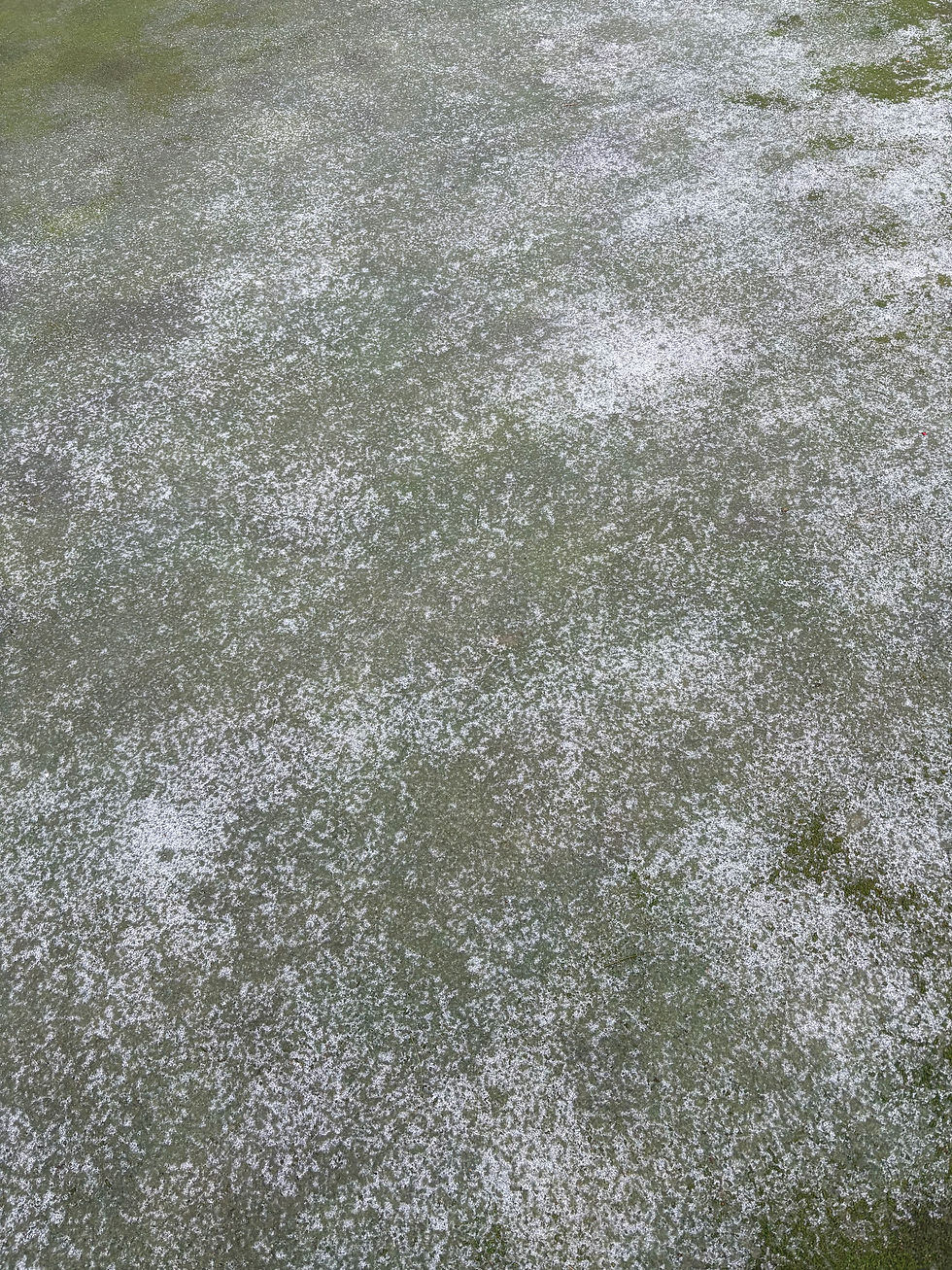
I have received a few questions about the ice and puddles on greens concerning drainage. The ice formation has nothing to do with poor drainage or infiltration rates on greens. The best drainage or infiltration rates won't matter when the soil profile/root zone is frozen. I know for a fact that the frost was down at least 9 inches on greens during the thaw. When the ground is frozen the green surface will act like an asphalt parking lot with no where for the water to go. With the low areas, mounds, and collection areas that our greens feature it can cause a tremendous amount of water to collect in certain areas when the ground is frozen. This ice formation has nothing to do with our subsurface drainage or infiltration. Drainage and infiltration are two areas the agronomy team are constantly working on improving through our aeration and topdressing programs. These programs will become more crucial as our greens age as well as lowering collar dams that can prevent or slow water working off the greens surface. Below is a picture of melting ice on greens and you can see all of our aeration holes in the pattern on the ice.
I have also been repeatedly asked and received emails concerning tree work. We currently have a greens committee approved list that we will be working off of in 2026. At this time, I do not have my 2026 budget yet. I have had some back and forth conversation with corporate concerning the tree budget as I was hoping to take advantage of the ideal conditions we had in early January for tree work. It currently looks like we will have a substantial tree budget for 2026 starting in March. Once confirmed the agronomy team will start working off the greens committee's approved list. The agronomy team will also focus on addressing some of the green's that are in need of more sunlight especially morning light. We will be looking at work to 2,3,6,7 greens first as they have the highest current needs. The agronomy team will update tree work progress via the blog when course conditions allow us to start the work.