Micro Tine Greens/Geese
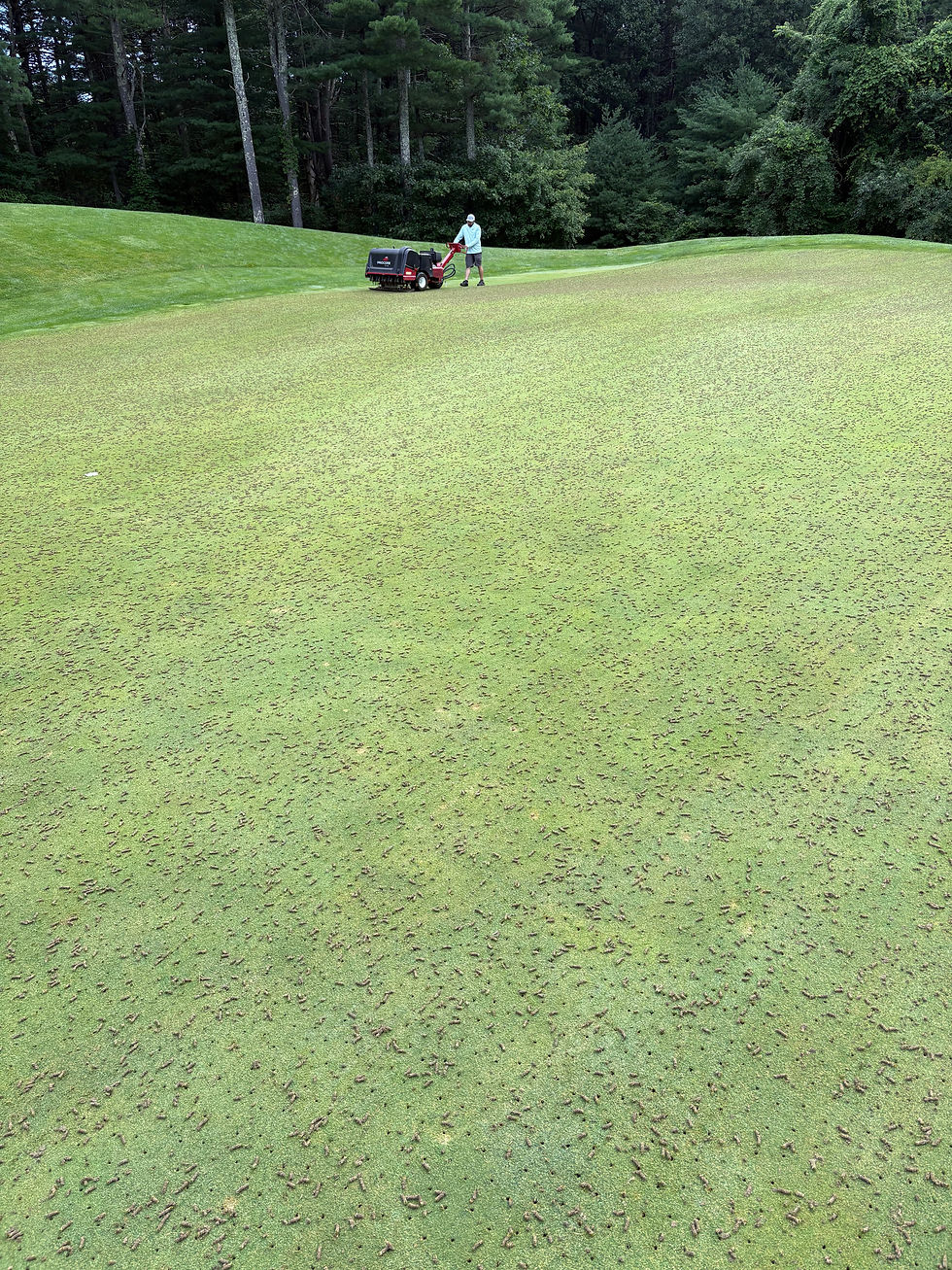
On Monday, July 27th we performed a micro tine/vent to greens. A micro tine utilizes a small specialized aeration tine to pull a very small core from the greens surface. Some questions have come up of why we did this so close to our normal greens aeration. First off greens venting is something that is part of our normal agronomy program. We have scheduled a micro tine to greens in June, July, and September/October as part of routine greens maintenance.
Additionally our irrigation water is very high in sodium which causes sodium to build up in the root system. This negatively impacts all turf areas, but needs to be closely monitored and managed on greens. The agronomy team makes monthly applications to flush the sodium out of the greens root zone. Unfortunately there is no substitute for natural rainfall when it comes to flushing out sodium. Having the holes in the greens will facilitate better movement of rainfall/water through the soil system helping to flush the sodium. The holes also help with drying out and firming up the greens surface quicker after big rain events.
During the micro tine we are also removing thatch. While I feel greens have started to turn the corner this season and have played better they still get slow and puffy under humid or moist conditions. No matter how good a greens soil profile is they will always slow some in humid conditions. Micro tining is an opportunity for the agronomy team to pull some additional thatch in a non disruptive way and continue with our efforts to take greens to the next level and better combat slower conditions in humid weather. Additional thatch removal also will help with firmness down the road.
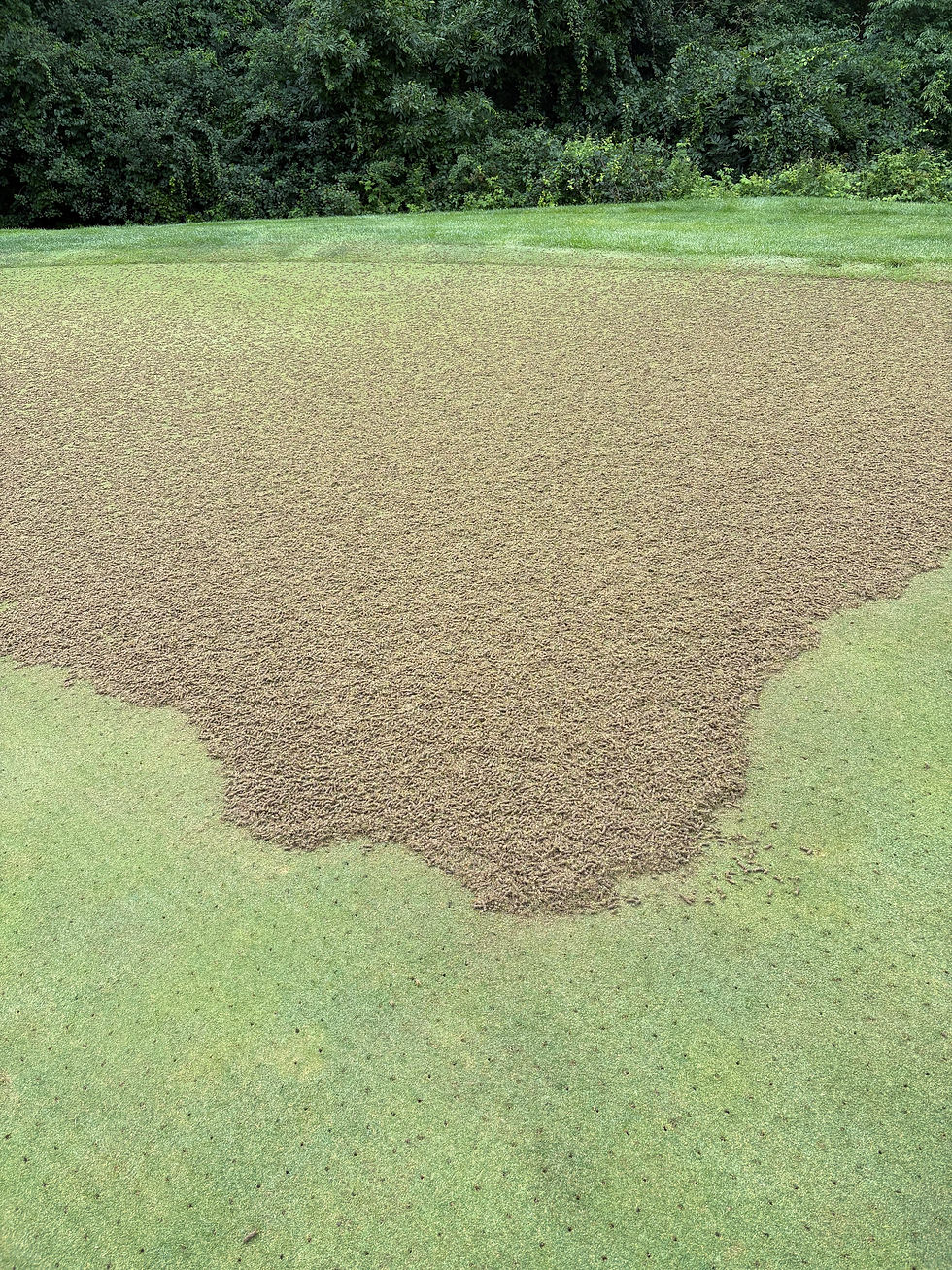
Micro tining/venting also allows for oxygen to reach the root zone and other gases to escape. The oxygen helps the microbe population in the soil which naturally helps to break down thatch. After very wet periods, like the weather we received and was forecasted, anaerobic conditions can occur and microbe populations will decrease. The agronomy team is always feeding the microbes with carbon and humic acid to boost the microbe populations. Keeping oxygen in the root zone helps the overall biology of the root zone and further contributes to thatch reduction.
There are also a number of other benefits to micro tining that I won't go through. All of them help ensure the long term success of the greens and golf course. A lot of the practices we do are not for your round tomorrow, next week, or even next month, but for your round year's from now.
The families of geese on the golf course can finally fly. The young have a large period in their development where they can't fly and the adults go through a period where they molt and can't fly as well. With all families now having the ability to fly we were able to get them to leave property on Monday and Tuesday. They did return on Wednesday afternoon. We are permitted to harass the geese and use lasers and pyrotechnics to try to scare them off. With constant harassment we should be able to keep them off of property for the most part moving forward.


